Rescuer Portrait: Bruno Jelk
Rescuer Portrait
December 10, 2025
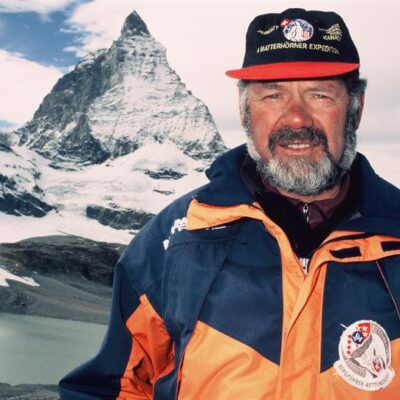
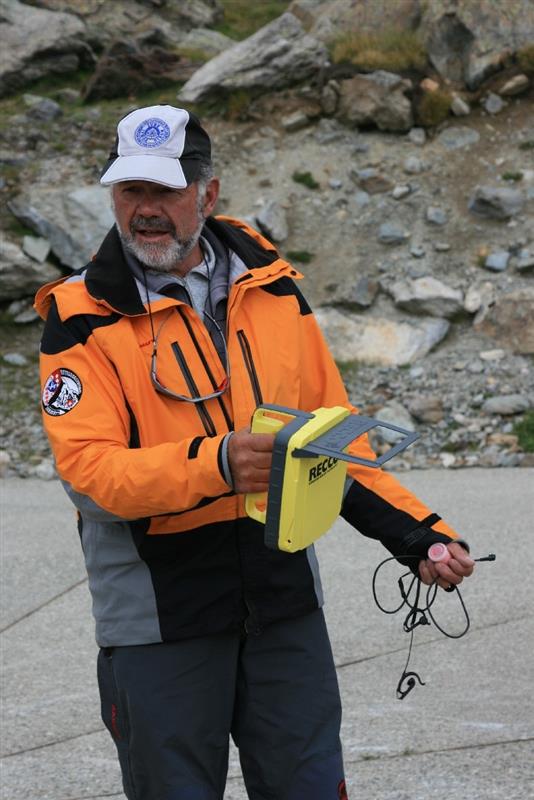
Bruno Jelk of Switzerland has been a mountain guide for 50 years and was the head of the Zermatt Mountain Rescue from 1980 to 2014. Together with Air Zermatt, he carried out roughly 5,000 mountain rescues during this time, including many rescues involving avalanches and crevasses. On the Matterhorn alone, he directed 786 rescues. During his work, he also had to recover about 700 people who had died.
Jelk already has seven weeks of skiing in his guide calendar for the coming winter, and he also guides frequently in the summer. When the weather is good, he’s on the road somewhere almost every day – though less extreme outings than during his previous work life. These days, he leaves that to those are younger. Now, he does more of what he enjoys.
Jelk has played a crucial role in development of the RECCO system and talked to us about his diverse experiences as a mountain guide and mountain rescuer.
You are on the way to Nepal and have been there regularly for many years. How did come about?
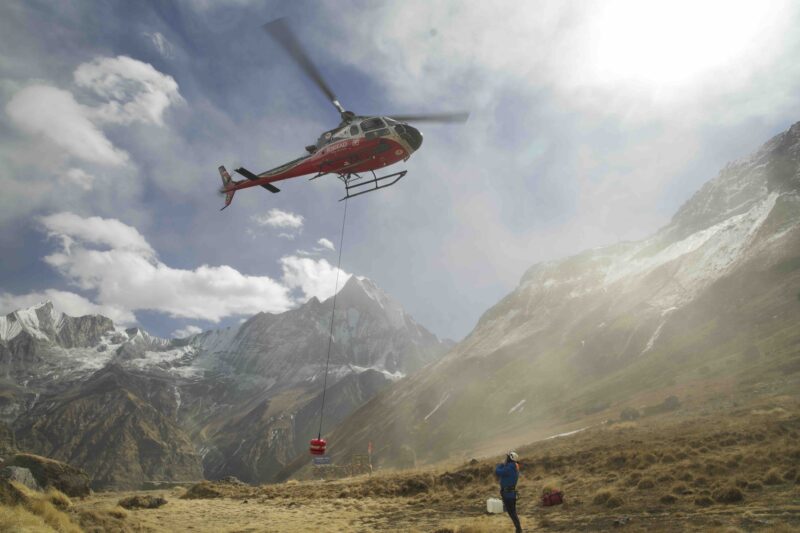
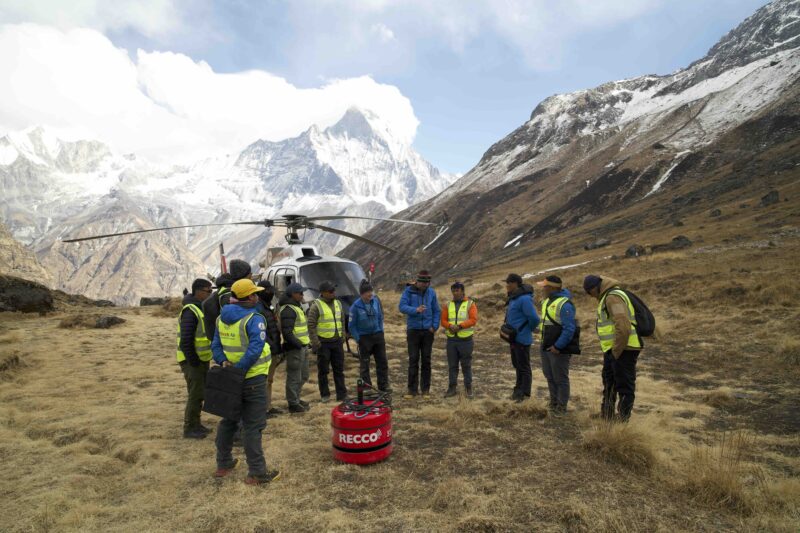
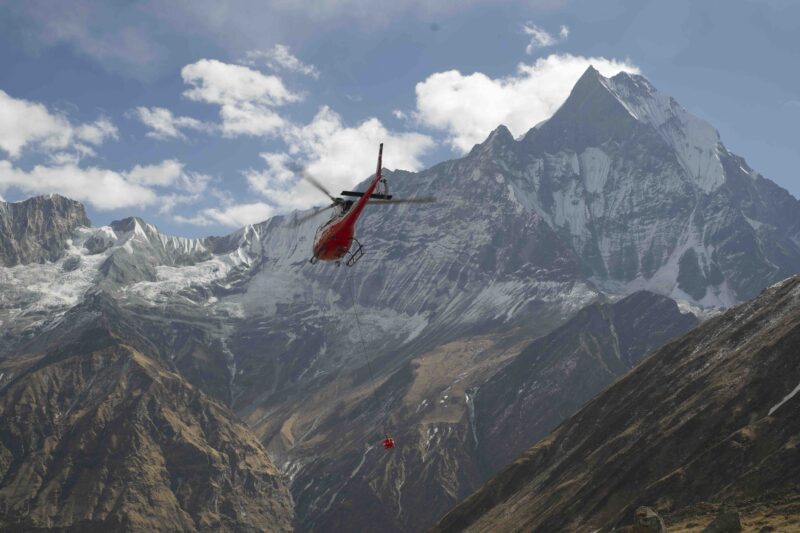
I had been to Nepal a lot for expeditions and mountaineering before, but the rescue service was a coincidence. In 2009 I got a message from Slovenia that Tomaž Humar had an accident at Langtang Lirung. I was asked if we had a solution to help him. After that, we flew to Nepal every year to train sherpas and pilots. During the earthquake in 2015 we were asked to help and to fly with a hanging load, which requires special training. At that time, we were flying material to valleys where the earthquake had destroyed everything. We also helped to build schools and a hospital. I was last there to educate about RECCO in January this year.
How did you become a mountain rescuer?
I grew up on an alpine pasture. That's where you learn to help when there are problems. After that I worked for a cable car company and I underwent ski patrol training. The rescue service has always fascinated me. When I came to Zermatt, I first helped as a rescuer at the rescue station. In 1980, the rescue chief unfortunately had an accident. I was asked if I would take office. I agreed to take it for a year. In the end, it turned into 34 years.
And you have always maintained the attitude of helping?
My attitude was to help whenever possible. Always engage, even in bad weather. But you can't do anything about the weather. If you had to stay at home, that was a horror for me. That's why I had a tendency to go out in any weather. And there you are not alone, you cannot do anything alone. If the risk was too great, we had to cancel. But after that, after all, you could sleep, knowing that you did the maximum.
Are there any missions that you particularly remember?
There are many rescues that have been remembered. I had the bad luck to rescue eleven mountain guide comrades who were fatally injured. These images are still in my head. But that didn't really stop me from continuing, or not letting me sleep at night. But, of course, one does not forget about this.
There are also positive memories of rescues: we experienced an accident at the “Dom". That person was 42 meters deep in a crevasse. To recover the person, we drilled a 20-meter-long corridor with a compressor. He was 17 degrees undercooled, came to the hospital in Bern and was warmed up there with the heart-lung machine. He eventually married the nurse. We are still in contact. Of course, such a memory is very positive.
You have been working with RECCO for 42 years and were significantly involved in the early development of the system. How did that start?
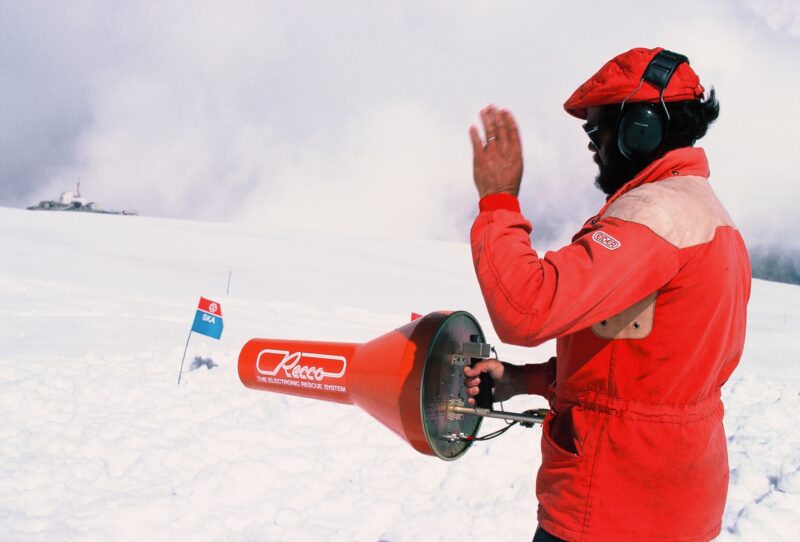
There was a good cooperation between Beat Perren and Air Zermatt, and we were supposed to test this device on the glacier. I was immediately impressed by the fact that people don't have to turn on anything or wear it on their body with a battery, which is always difficult. However, the first detector was too big and heavy. That's why I said that it needs to become lighter and smaller.
As a next step, the RECCO R3 was presented. This was a plate with antennas, and unfortunately it did not work at all. I was the technical director for Switzerland and said to Magnus Granhed: "We have a problem, people can't find anything with this device. You have to produce a device that works!“. RECCO finally presented the R8 version. It was very well received and also worked well.
We used it a lot, mainly in crevasses. To search there with the avalanche transceiver is not possible, because you cannot move above the column. We located lost people very well with the RECCO detector, because it was a direct signal.
We tried to improve the detector, and worked closely together with RECCO. These improvements have been implemented and the latest generation works very well indeed.
The system has since then been further developed into a year-round system and the RECCO SAR helicopter detector was introduced in 2016. Air Zermatt and you were also involved in the development here...
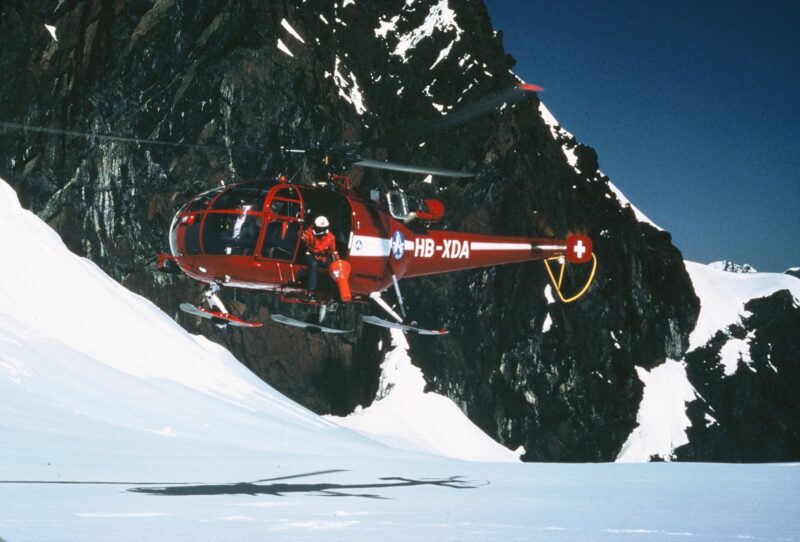
With the SAR helicopter detector, I saw a big advantage for summer applications. The helicopter carried system allows you to easier locate hikers or alpinists who are equipped with reflectors. The handheld detector is usually better suited for searching in avalanches. Although, there are big avalanches in the Himalayan region for example. If there are no rescuers on close by, the SAR helicopter detector can also be used for searching in avalanches. That is why I have always advocated placing a SAR helicopter detector in Nepal, which is now available since last year.
Mountain rescuers work in a team. How do you keep your team together?
Everyone should have the opportunity to share their point of view and emotions – not just the bosses. This brings the team together. I also always tried to hand over responsibility, if someone had just started new, like this: "Today you are leading the operation.“ If unexpected problems arose, I could help. But they felt that they were not just henchmen. This makes you much more independent. I have had very good experiences with it.
You've been closely involved around a lot of accidents. How has this changed your own behavior in the mountains?
Of course, you know a lot of dangers or things that happen more often. This will certainly make you more careful. But this is not to say that you cannot have an accident – especially when it comes to avalanches. Anyone can get into an avalanche. I always say that if you don't want to get into an avalanche, you can't go skiing, or off-piste skiing. If a person does not want to fall into a crevasse, you should only look at pictures of the glacier, and not go there yourself – only then you have zero risk.
It must be said, many people have been really unlucky in the mountains, and an accident can happen to anyone. You should always think: at some point an accident can happen, there's nothing you can do about it. Good alpinists often get injured in simple terrain. You’re always living with that fact, and everyone in the mountains knows that too.
I would not say that I went to the mountains less, because of my profession. But I know the accidents and the background to why those can happen, so I'm a little more careful.
What has changed since the introduction of the mobile phone?
The equipment has improved massively in the meantime. The mobile phone has changed a lot. The alarm comes quicker, you know quicker where someone is and what happened. This is very positive. Looking at Zermatt, it can sometime be tricky since we are close to the border between Italy and Switzerland. It may be that both countries get the same alarm. You have to decide who moves out. Without communication, it can happen that two rescue teams leave for the same mission.
Has the mobile phone also changed the behavior of the alpinists?
The bigger problem is that many climbers start the tour in unfavorable conditions and call for help with their mobile phone when they can’t get any further. You have to understand that to some extent, since people have often made a long journey for their tour. Most of them are planning the Matterhorn and the stick to their plan, no matter what. Nowadays we have a lot of evacuations of uninjured people who can't get any further, or got into bad weather or darkness.
The mobile phone has a lot of positive factors when the alarm comes quickly and we know what happened where. But the downside is that you will be contacted more often if they get stuck. But you have to live with that as a rescuer.
How do you see the future? What technical developments do you expect?
The future will show that perhaps more can be done with drones, especially in search missions. The future will be more in the technical direction. But I think that there is not much that can be improved in terrestrial terms, perhaps a little modernization. The major advances were made with the introduction of fixed-wing aircraft and helicopters. But I think that the future will go in the direction of drones.
What are the biggest challenges for rescue workers today?
The bureaucracy is very different and complex these days. When I started as a rescuer, we talked to the pilot and he made a decision. Today it's different. Everything is planned in advance and documented in a more strict way. This is very difficult, especially for young pilots. If they do something that is not in the paper, they risk a license block.
In the past, you always had the winch on the outside of the helicopter. On the other hand, you attached a weight, included stones, or had someone standing outside. This is not possible today. Too many regulations risk to ruin the rescue operations.The former technical director of Air Zermatt told me that the Flight Operations Manual (FOM) initially had 1000 pages. When he stepped down, it had 10,000 pages. You are severely restricted, especially in flight rescue.
In addition, today everything is filmed on the mobile phone. This is then often added to the Flight Operation Manual and then there are difficulties. Public authorities such as the police have their regulations, and it is often difficult to change something.
When I started many years ago, we just decided for ourselves what we were going to do, and it didn't turn anyone's head. We were well prepared, and didn't set out to kill ourselves, which makes me question why you have to issue so many regulations.
Is there anything else you would like to tell people who head into the mountains?
To adapt to the circumstances. Inform yourself about what is good and what is bad. Do not overexert yourself, do not cross your boundaries. Do not think: "I have a mobile phone and if it's not possible to finish my adventure, I'll call for help.“ That should be forbidden, right? One problem is that people overestimate themselves excessively. I spend a lot of time in the mountains, and sometimes I have to say, what are people with this behavior actually doing here?