Rescuer Portrait: Matthias Hofer

Rescuer Portrait

April 23, 2026

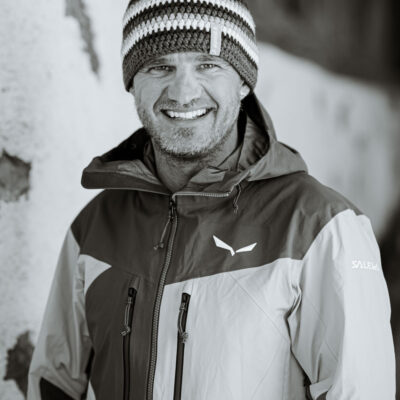
Matthias Hofer from Villanders near Klausen in South Tyrol is a full-time mountain guide and mountain rescuer. He spends 180 days a year mountaineering, guiding and educating in the mountains. His favourite discipline is climbing, as he loves the movement and the fact that it requires you to switch off your mind and activate every muscle in your body. Matthias has worked extensively with the RECCO system throughout his career and talks about the changes in mountain guiding and mountain rescue in this interview.

Your home region of South Tyrol is one of the most beautiful areas in the world. Are these your favourite mountains?

I am asked this question almost weekly. I have travelled to nearly 60 countries in my life, mainly mountain regions. I have been to many places and there are many beautiful places. But the most beautiful place is here in South Tyrol. However, tourism has not always been good for us. What inspires me about many other countries are above all the mountain peoples, who are much happier in their modest existence than we are here in Europe. Otherwise, I do believe that the Dolomites are the most beautiful area in the world.

How did you become a mountain guide?

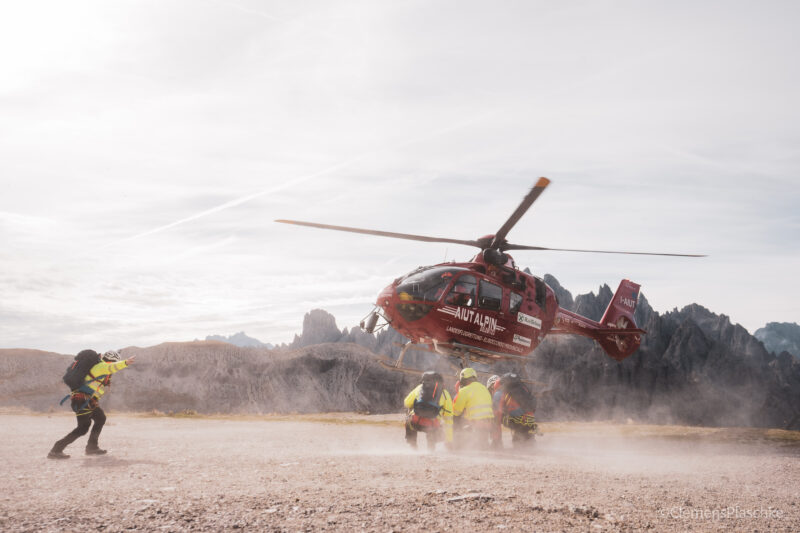
I wouldn't have become a mountain guide if it weren't for mountain rescue. About 25 years ago, at the suggestion of friends, I joined the mountain rescue service with them. My instructor then inspired me to continue. I decided relatively quickly that I also wanted to become a mountain guide. I intensified my work with the mountain rescue service and was the training manager for the South Tyrolean mountain rescue service for several years. I am still an instructor with the mountain rescue service, but I have handed over the training management to a colleague. I am currently also heavily involved in training mountain guides.

What has changed in the behaviour of people in the mountains during your time as a mountain rescuer?

I am convinced that people today call for rescue relatively quickly, even for minor issues. For example, hikers arrive late in the evening at a hut that is closed. Because it is dark, they cannot get back down. Then the mountain rescue service has to go out. This may have something to do with the fact that we are a very touristy area and tourism has changed completely. We now have guests from all over the world. In the past, Germans, Austrians, and Swiss were our regular customers. Culturally, they have the same understanding of the mountains and are quite similar to us. Now we have guests from all over the world. Some of them have no connection to the mountains. That's what these kinds of missions entail. The biggest challenge is the increasing number of missions, not the missions themselves. That's why it's particularly important to find a way to make people aware that they shouldn't always call mountain rescue immediately.

What are the most common reasons for rescue missions?

Most rescue missions in South Tyrol are simple hiking missions. 60% of the missions involve people we pick up on hiking trails. They have ankle injuries, are exhausted, or simply can't go on. This is becoming more common. We are currently running campaigns to encourage people to take more initiative and not call the rescue service for every little thing.

Searching for missing persons is also part of your work. How do you go about this and how is RECCO used?

RECCO is naturally part of the search process, especially when searching for missing persons. First, we try to use the missing person's smartphone: Can we get any information from it? If we have access to their computer, can we use it to locate the smartphone? Does the missing person have any location apps installed? Can the authorities locate the device? Network operators can tell us which transmission towers the device last logged into, which helps us enormously. We have also developed programs that help us narrow down the area. If we don't get anywhere with that, RECCO is a huge help in the search. However, there are still many who think that RECCO is a winter system. But today, RECCO can be used to find missing persons in summer as well as in winter.

Are there any missions that have stayed with you in particular?

There are many missions that stick in your mind, but each one has its own challenges and special moments. Some remain particularly memorable, but I don't want to single any out here. Every mission contributes in its own way to gaining experience and growing as a person.

What is the situation like at Mountain Rescue South Tyrol with regard to young recruits?

We are in a very fortunate position when it comes to young recruits. We have an increasing number of mountain rescuers. I think this is due to good training. Many young people appreciate the training provided by the mountain rescue service and come to us. We are in a fortunate position in this regard.

How much information do you usually have before starting the search for a missing person?

It's difficult to answer that in general terms. Sometimes we have quite a lot of information. Some relatives know where the missing person was, or pictures from the summit have been sent. Information about equipment can also provide us with important details, e.g., whether the missing person is wearing a RECCO reflector can be very useful. In some cases, however, we have nothing at all. There are people who have been missing for three days, and we don't even know their starting point.

As a mountain rescuer, you spend a lot of time in the mountains. Has your own behavior there changed over the years?

Yes, it has changed in the last year or two. I am now 45 years old, and when I reflect on how I used to handle things: When I was young, I started out highly motivated and needed a lot of luck to survive the tours we did. Then at some point I became a mountain guide, and I realized that we had learned along the way. I'm still very motivated, but perhaps with a different approach.When you start out as a mountain guide, you're in very good physical condition, especially when it comes to climbing. In recent years, I've come to see things a little differently. There have been many accidents, including some involving fellow mountain guides, which have really affected me deeply. It's important that we take our time in the mountains. That we are careful and pay attention so that we can grow old. It's relatively easy to become a good mountain guide, but relatively difficult to become an old mountain guide, as we say.

How important is teamwork for mountain rescuers?

In South Tyrol, we have a strong club culture. Everyone belongs to a club somewhere, and it goes without saying that you get involved and support each other.

What advice would you give to people who go hiking or climbing?

People need to understand that careful planning can help them avoid many mistakes and uncertainties when they venture into the terrain, climb a mountain, or go hiking. This simply leads to fewer accidents.

Photocredit: Clemens Plaschke

Latest posts

Press release
April 14, 2026

SCOTT Launches First RECCO Equipped Summer Product, Expanding Searchability For Trail Runners

RECCO, a global leader in rescue technology, today announced an extended partnership with SCOTT Sports to introduce SCOTT’s first summer product equipped with a RECCO® reflector. The launch of the SCOTT Endurance SL Waterproof Jacket, available for both me...
Press release
March 13, 2026

RECCO Expands Global SAR Helicopter Detector Network With Three New Deployments Across North America

RECCO, a global leader in rescue technology, today announced the continued expansion of its RECCO SAR Helicopter Detector network with new deployments in Prince George, British Columbia; Riverside County, California; and the state of New York. These additi...
Press release
January 29, 2026

RECCO Named Official Safety Partner Of The 2026 Merrell Skyrunner® World Series

RECCO, the search-and-rescue technology, this week unveiled a new partnership with the Merrell Skyrunner® World Series, becoming the Official Safety Partner for the 2026 season.The Skyrunner® World Series was launched in 2004 and has grown to represent one...